

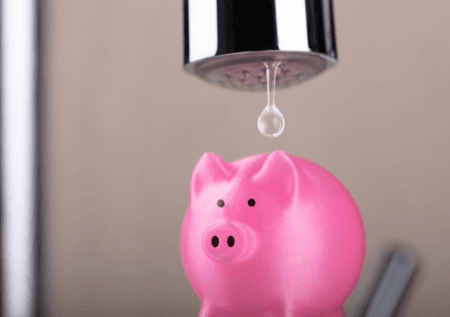
New compulsory water-efficiency labels for household products will be introduced by the UK Government and will apply to products including showers, taps, toilets, dishwashers and washing machines, with a rating system intended to help consumers choose products that use less water. The labels are expected to work in a similar way to existing energy labels.
The news item by ITV News Consumer Editor Chris Choi explained that the Mandatory Water Efficiency Labelling Scheme (MWELs) could help households reduce both water and energy bills, as reduced hot water use can lower energy consumption. ITV reported government estimates suggesting the labels could save £125 million on water bills and £147 million on energy bills over 10 years.
Supporters, including Water Minister Emma Hardy and industry voices such as Triton, say the labels could help households save money by using less water and reducing energy needed for heating. They point to potential long-term savings and lower overall demand. However, the BMF has argued that the change may confuse consumers, as a similar voluntary scheme already exists, and questioned whether the benefits justify the added complexity and cost for manufacturers.
The Bathroom Association supports the principle of helping consumers make more informed choices about water efficiency, but says the MWELs must be technically accurate, fair, and capable of supporting innovation.
In its response to the government’s MWELs proposals, the Association has called for a dedicated assessment method for electric showers. It says electric showers should be assessed as power-limited instantaneous heaters, using calculations based on electrical input and standardised inlet and outlet temperature assumptions, rather than pressure-based flow testing.
The Association warns that without this change, electric showers could be mislabelled, potentially misleading consumers and weakening confidence in the scheme.
It is also calling for a more flexible approach to product ratings so that emerging water-saving technologies are properly recognised. These include recirculating shower systems, cold-start taps, wastewater heat-recovery systems, and hybrid high-efficiency shower designs.
The Association says the scheme must avoid unfairly downgrading innovative products simply because the proposed label bands or test methods do not reflect how modern bathroom technologies perform in real homes. A more flexible system, supported by clear tolerances and appropriate test methods, would help ensure that the scheme provides consumers with reliable information while continuing to encourage investment in water-saving products.
For more information, watch the ITV News report.